

30 Apr Why Schools Are Rethinking Screen Time, And Why Human Tutoring Matters More Than Ever

Why Schools Are Rethinking Screen Time, And Why Human Tutoring Matters More Than Ever
Written by Claire Avenoso
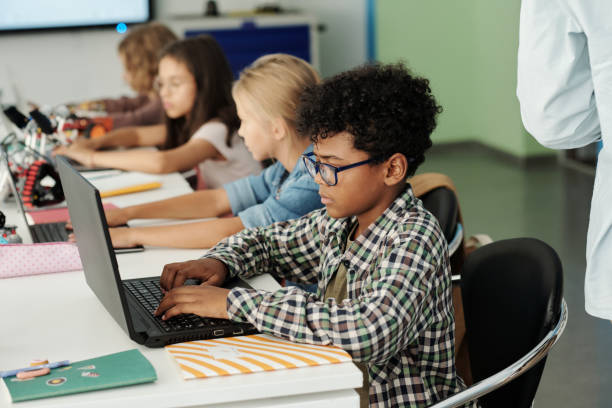
Across the country, school leaders are being asked to make harder decisions about how technology is used during the school day. New screen-time legislation in states such as Utah, Tennessee, and Iowa reflects a growing concern: Students need more than digital access to make academic progress. They need conversation, feedback, relationship-building, and responsive instruction.
While the details vary by state, the broader message is clear: Schools are being asked to use technology more intentionally, especially with younger learners. These efforts are not necessarily anti-technology. Instead, they reflect a growing recognition that digital tools should support instruction, not replace the conversation, feedback, relationship-building, and responsive teaching students need to make meaningful academic progress.
What the Research and Legislation Tell Us
States and school districts are rethinking how, and how much technology belongs in early classrooms. Effective July 1, 2026, Utah’s HB 273 requires the State Board of Education to develop a model policy for balanced technology use, including strong limits on passive or independent screen use in K-3 classrooms. Tennessee’s legislature recently passed a bill requiring schools to minimize device use except for “targeted instructional support, intervention, or remediation.” Iowa’s pending legislation would cap digital instruction at 60 minutes per day for K-5 students.
These policy shifts aren’t limited to state legislations. Los Angeles Unified School District’s board just passed a resolution that would remove most technology usage in grades k-2, and require heavily tracking and limited usage in later grades.
These laws and policy changes didn’t emerge from nowhere. Advocacy researchers, child psychologists, and organizations like the Children and Screens Institute have produced evidence that passive screen-based instruction, particularly for elementary-age children, doesn’t produce the same cognitive engagement as human interaction. Young learners develop language, reasoning, and social skills most effectively through real conversation, immediate feedback, and relationships with trusted adults. A screen, no matter how adaptive, can’t replicate that.
Why Human Tutoring Has Never Been More Relevant
These new laws and research are precisely why human-led classroom help has become essential. Instead of opting for an online support system that may not fit in with school screen-time limitations, choose in-person assistance like high-impact tutors.
When a skilled tutor sits with a struggling student, a type of learning happens that no virtual tutoring program can reproduce. A tutor can ask questions, read body language, adjust pace, and celebrate a breakthrough, creating an environment where the student is comfortable and able to learn at their own pace .
Research consistently shows that high-dosage, human-led tutoring is one of the highest-impact interventions available to schools. A live tutor can explain in real-time why an answer is wrong. They also build trust over time with students. They adapt to students’ academic gaps and their emotional states.
HeyTutor’s model is human-first by design, and as screen-time scrutiny intensifies, models like this become more important than ever.
Practical Tips: Building a High-Impact Tutoring Program Without Screen Overload
Now that we’ve gone over some of the rhetoric surrounding classroom screens and looked at how human tutoring can support students, let’s go over some practical tips for implementing a human-first support system in schools everywhere.
For Principals and Superintendents:
- Find a human-first, in-person tutoring program to limit unnecessary screen time in classrooms.
- Research your budget. Use Title I ESSER dollars funding to support structured tutoring.
- Track student progress with limited technology. Can you find a solution that is led by humans but easy to keep track of results?
For Teachers:
- Partner with tutors as an extension of your instruction, not a replacement, share specific skill gaps, not just general concerns.
- Reserve screen-based tools for high-order tasks (e.g., research, creation, collaboration) and lean on tutors for foundational skill-building.
For Parents:
- Ask your child’s schools specifically how tutoring hours are structured: Is it screen-based or human-led?
- Advocate for a high-dosage in-person tutoring program at your child’s school if they do not have one.
The conversation about screen time in schools isn’t going away. But the goal was never “no technology,” it was better classroom engagement, and better outcomes for students. Human tutoring has always been the answer to these goals.
Interested in building an adaptable, human-first tutoring program for your school or district? HeyTutor is here to help. Explore our website or book a free call with our team.
